
THE PEOPLE PROJECT | No. 002: RAYMOND CHIOZZA — A LIFE IN FOCUS

I do not remember the exact first time I met Raymond Chiozza.
And maybe that is fitting.
Some people enter your life through a single moment you can point to.
Others simply become part of the landscape.
For nearly seventeen years, Raymond has been part of mine.
When I began my career with the Shelby County Sheriff’s Office in 2009, I entered the world of 911 telecommunications.
Dispatch consoles.
Radio traffic.
Phone calls.
CAD screens.
Policies.
Technology.
And an entire system most people will never think about until the moment they desperately need it.
Raymond was already there.
Actually, Raymond had been there for a very long time.
Over the years, our paths crossed through meetings, communications projects, training, technology and the countless other things that come with working around 911.
Eventually, though, I discovered we shared another language.
Photography.
And suddenly Raymond was not just Raymond from 911.
He was Raymond with a camera.
Anyone who knows me knows how dangerous that discovery can be.
Two photographers can spend an unreasonable amount of time discussing a piece of equipment designed to capture 1/1000th of a second.
Lenses.
Bodies.
Light.
Editing.
Locations.
Old photographs.
New photographs.
Why one image works and another almost works.
Photography gives us an impressive number of ways to complicate the simple act of pushing a button.
But somewhere along the way, I began to realize something about Raymond.
The two worlds he had spent his life in were not really as different as they seemed.
911 is about moments.
Photography is about moments.
One requires recognizing the importance of a second while it is happening.
The other tries to make sure that second is not forgotten.
Raymond has spent a lifetime doing both.
Long before I ever wore a headset or carried a camera professionally, Raymond was already working in emergency communications.
He began with the Memphis Fire Department as a teenager and eventually became Chief of Fire Communications.
That career alone would have given him enough stories for several lifetimes.
There is one in particular.
On August 16, 1977, Raymond was 21 years old and working in Memphis Fire communications when an ambulance call came from Graceland.
The patient was Elvis Presley.
Within a short time, the world knew Elvis was dead.
And the phones began ringing.
News organizations.
Reporters.
People looking for information.
A communications center suddenly found itself sitting in the middle of one of the biggest stories in Memphis history.
Raymond was there.
But there is another part of that story that feels especially appropriate for this project.
Raymond had a camera.
He photographed Memphis in the days surrounding Elvis’ death.
The crowds.
The people.
The emotion.
Moments that probably felt temporary at the time became pieces of history preserved on film.
Decades later, those photographs still exist.
That is the strange power of photography.
We rarely know which photographs will matter when we make them.
Sometimes we are simply pointing a camera toward something that seems worth remembering.
Then years pass.
People change.
Buildings disappear.
Communities evolve.
And suddenly a photograph becomes more than a photograph.
It becomes evidence that a moment existed.
Raymond seems to have understood that very early.
His career eventually took him from Memphis Fire communications to leading the Shelby County Emergency Communications District.
The technology around him changed dramatically.
Switchboards became computer systems.
Landlines became cell phones.
Voice calls became text messages.
Maps became digital.
Information began moving faster than anyone working in communications during the 1970s could have imagined.
But the purpose never really changed.
Someone needs help.
Someone answers.
Everything after that matters.
Raymond once described the work of 911 with a wonderfully simple thought:
Our job is about seconds saving lives.
That is the kind of sentence that only comes from someone who truly understands the work.
Because when you spend enough time around 911, you learn that seconds are not abstract measurements.
Seconds have consequences.
A dispatcher answering.
A location being verified.
Information being entered correctly.
A radio transmission being understood.
A responder knowing what is waiting on the other side of a door.
Tiny moments.
Enormous consequences.
I spent years working in that world.
So did Raymond.
And I think that shared experience is part of why I appreciate his photography so much.
People sometimes assume photography is primarily about cameras.
It is not.
Photography is about noticing.
The camera is simply the tool.
You have to recognize the moment first.
A firefighter framed against smoke.
A face in a crowd.
A gesture between two people.
Light hitting a building differently than it did thirty seconds earlier.
Something happening at the edge of a scene everyone else is looking past.
You have to pay attention.
Raymond pays attention.
Over the years, his photographs have documented fires, firefighters, neighborhoods, public-safety ceremonies, historic places, sporting events and everyday pieces of Memphis life.
Some have appeared in national fire-service publications.
Others have been used by local news organizations.
Some will probably never travel farther than a computer screen, a print or a family album.
That does not make them less important.
One of the lessons photography has taught me is that significance is not determined by audience size.
Sometimes the most important photograph you ever make matters deeply to only one person.
That is enough.
Raymond has also been behind a camera long enough to understand something every photographer eventually learns.
You can make thousands of photographs of other people while slowly disappearing from the photographic record yourself.
Photographers are very good at being behind things.
Behind the lens.
Behind the crowd.
Behind the scene.
Behind everybody else.
Which is one reason I wanted Raymond on the other side of my camera.
Because The People Project is not really about creating another photograph.
There are already plenty of photographs.
It is about recognizing the person behind them.
For more than fifty years, Raymond has watched Memphis change.
Not from one perspective, but from several.
From behind a communications console.
From inside the public-safety world.
Through the viewfinder of a camera.
He has watched technology transform the way people ask for help.
He has watched generations of dispatchers and first responders come and go.
He has watched neighborhoods change.
He has photographed moments that became history.
And somehow he has continued doing the work.
That matters to me.
Longevity is easy to describe with a number.
Understanding what the number represents is harder.
Fifty years means showing up when you are tired.
Working through changes you did not ask for.
Learning technology that did not exist when you started.
Watching coworkers become friends.
Watching friends retire.
Sometimes watching friends die.
Seeing good days.
Seeing terrible ones.
And returning the next day anyway.
Public safety has a way of measuring time differently.
Careers become eras.
Coworkers become family.
Stories become institutional memory.
People who were once the young ones in the room eventually become the people everyone else looks toward when they need to know how something used to work, why something changed or what happened the last time something went wrong.
Raymond became one of those people.
I understand that a little better now than I would have seventeen years ago.
When I first entered 911 communications, seventeen years sounded like an entire career.
Now I look around and realize I have become one of the people who has been here seventeen years.
Time has a sense of humor like that.
One day you are the new guy.
Then you blink.
Suddenly you are telling someone a story that begins with, “Back when we used to…”
That realization changes the way you see people who were already carrying years of experience when you arrived.
You begin to understand how much knowledge exists in people rather than manuals.
How much history disappears every time someone retires.
How many stories never get written down.
How much of an organization lives entirely inside the people who helped build it.
Maybe that is another reason this project has become important to me.
I spend a lot of time documenting events.
Ceremonies.
People.
Public safety.
Competitions.
Families.
Communities.
Moments.
Photography encourages you to look outward.
The People Project is forcing me to look a little deeper.
At the people who have been standing in those photographs all along.
Raymond is one of them.
Over seventeen years, I have known him through two worlds that have shaped a large portion of my own life.
911 taught me responsibility.
It taught me that details matter.
It taught me that sometimes the work nobody sees is the work that matters most.
Photography taught me to slow down.
To observe.
To recognize moments.
To understand that ordinary things become extraordinary once enough time has passed.
Raymond was living at the intersection of those two lessons long before I realized they belonged together.
There is something else I appreciate about that.
For all the technology surrounding his professional career, Raymond has spent his life doing something very human.
Preserving stories.
Sometimes through an emergency communications system.
Sometimes through photographs.
Sometimes simply by being one of the people who remembers.
The equipment changes.
The cameras change.
The computers change.
The radios change.
The buildings change.
Eventually, all of us change.
The stories remain.
I have thought a lot about that while building The People Project.
A camera is excellent at preserving what someone looked like at a particular moment.
But it cannot photograph experience.
It cannot show fifty years of knowledge.
It cannot capture every person whose emergency call reached a system someone spent a career helping build.
It cannot show every dispatcher supported.
Every problem solved.
Every technological change navigated.
Every fire photographed.
Every conversation.
Every lesson.
Every ordinary Tuesday when someone simply showed up and did the work.
A portrait cannot contain all of that.
Maybe it is not supposed to.
Maybe the job of a portrait is simply to make us stop long enough to ask about the person in it.
Who are they?
What have they seen?
What do they know?
What have they contributed?
What stories are sitting behind that face that we have never bothered to ask about?
After seventeen years of working around Raymond Chiozza, I realized something while preparing this project.
I knew Raymond.
But there were parts of his story I had never really stopped to consider.
The 21-year-old dispatcher sitting in Memphis Fire communications the day Elvis died.
The young photographer walking outside with a camera and documenting the crowds.
The communications professional watching an entire industry transform around him.
The leader helping move Shelby County 911 into technologies that once sounded like science fiction.
The photographer who, decades later, still sees a fire, a community event or a piece of Memphis history and thinks:
That is worth documenting.
I understand that instinct.
Maybe that is the part of Raymond’s story that connects with me most.
There is always another photograph.
Another story.
Another person.
Another moment that will never happen exactly the same way again.
So you raise the camera.
You pay attention.
And you preserve what you can.
I have spent seventeen years working around Raymond.
First through telecommunications.
Then through photography.
And somewhere between the two, I came to appreciate not simply what Raymond does, but what he represents.
Experience.
Institutional memory.
Curiosity.
Service.
And the quiet importance of continuing to care about the work even after you have been doing it longer than some of the people around you have been alive.
I suspect Raymond has forgotten more about emergency communications than many people will ever know.
I also suspect there are photographs sitting somewhere in his archive that will become more valuable with every passing year.
That is what happens when you spend a lifetime paying attention.
Eventually, you become part of the history you were documenting.
Today I finally get to turn the camera toward Raymond.
Not because his story can be captured in one photograph.
It cannot.
But because someone who has spent more than half a century answering moments, preserving moments and helping others through some of their most important moments deserves to have his own story preserved too.
Seventeen years after I first entered the world of 911 and found Raymond already there, I am still learning pieces of that story.
And perhaps that is exactly what The People Project is supposed to do.
Remind me to keep asking.
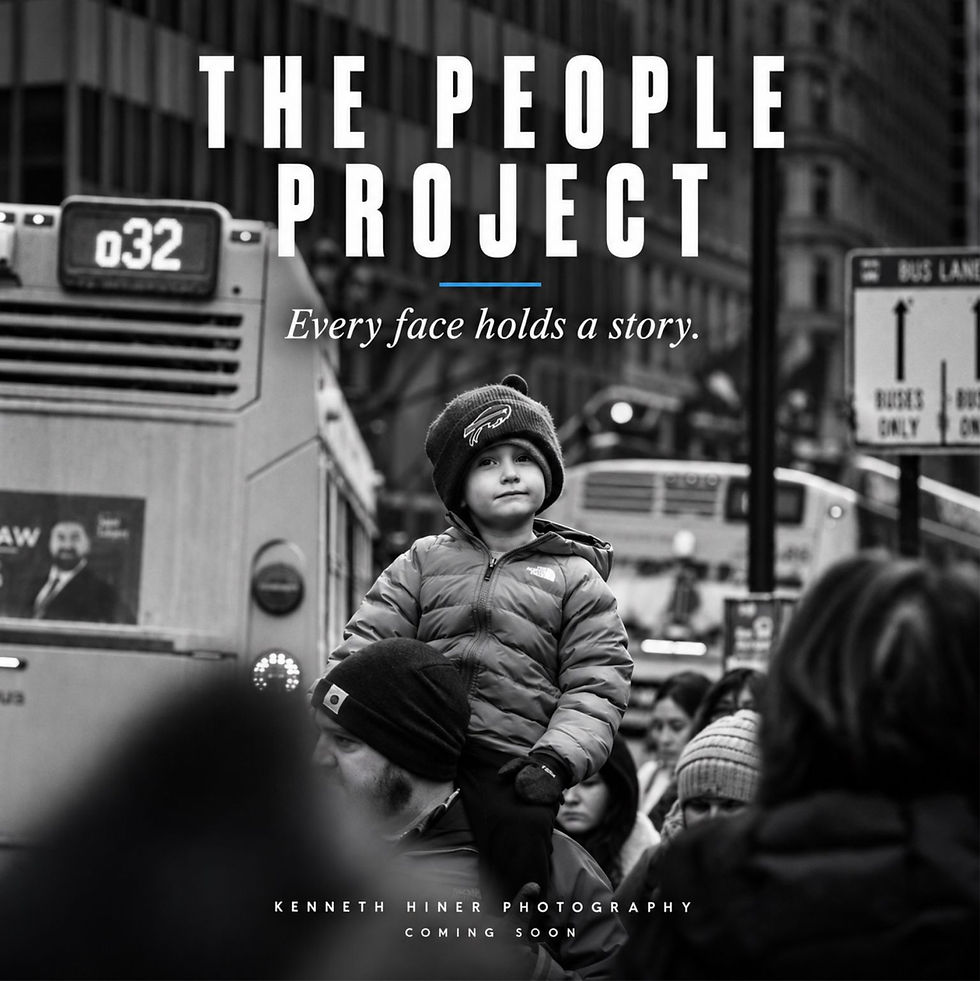
The People Project is an ongoing series revisiting the people, personalities and stories I have encountered throughout my years behind the camera.
Every face holds a story.


Comments